
Key Takeaways
- The teen years are a narrow window. Bones are still growing, and postural patterns are still setting, which makes this a far easier time to address spinal tension than adulthood.
- Half of teenagers spend four or more hours a day on screens outside of schoolwork, and the forward-head position that comes with it loads the neck far beyond what it was built to carry.
- Adjustments for teenagers use less force than adult care, are modified for a developing skeleton, and require a parent or guardian’s consent.
- Watch for clusters of signs rather than single ones: stiffness plus headaches plus fatigue that sleep doesn’t fix is a more meaningful pattern than any one symptom alone. Changes that appear abruptly rather than gradually are a separate pattern and belong with your pediatrician first.
- Screens are rarely the only factor. Birth history, past injuries, sleep debt, sport, and academic stress usually stack underneath, which is why taking the phone away on its own seldom resolves everything.
- Surface EMG scanning measures what a forward-head posture is actually costing the muscles holding the head up, so the conversation with your teen can rest on data instead of nagging.
- Backpack load and screen posture are two things families can change at home, and both make a measurable difference between visits.
Chiropractic care for teens is gentle, drug-free care focused on how a teenager’s spine and nervous system are functioning during the years when both are still developing. It is not the same as adult care, and it is not only for teens who are hurting. This guide covers what screen time is doing to adolescent posture, which warning signs are worth acting on, whether adjustments are safe at this age, and what a first visit actually looks like.
What Chiropractic Care for Teens Actually Involves
The approach is straightforward: identify areas of the spine where movement is restricted, or alignment has shifted, then address them so the nervous system can communicate without interference. That part is shared with adult care. The difference is everything around it.
Worth clarifying one term, because it gets flattened in most explanations. A subluxation is not simply a bone sitting in the wrong place. It’s neurological interference, a disruption in how the nervous system communicates with the rest of the body. That distinction matters for teenagers especially, because it explains why a postural problem can show up as fatigue, poor focus, or a short fuse rather than as back pain.
Between roughly 12 and 18, bones are lengthening, muscle patterns are setting, and the nervous system is maturing quickly. A pattern that would take years to establish in an adult can set in a matter of months at this age. That cuts both ways: it means problems compound faster, and it means the body responds to support more readily than it will later.
At Adjusted Living Chiropractic in Chesterton, Indiana, that assessment is neurologically focused rather than symptom-focused. Dr. Ryan Angelo is PX Docs certified, and Adjusted Living is the only PX Docs-certified pediatric chiropractic office in Chesterton and Porter County. The training is built around neurologically complex and sensitive young patients, which shapes how every teen in the practice is evaluated.
How Screen Time Loads the Teenage Neck
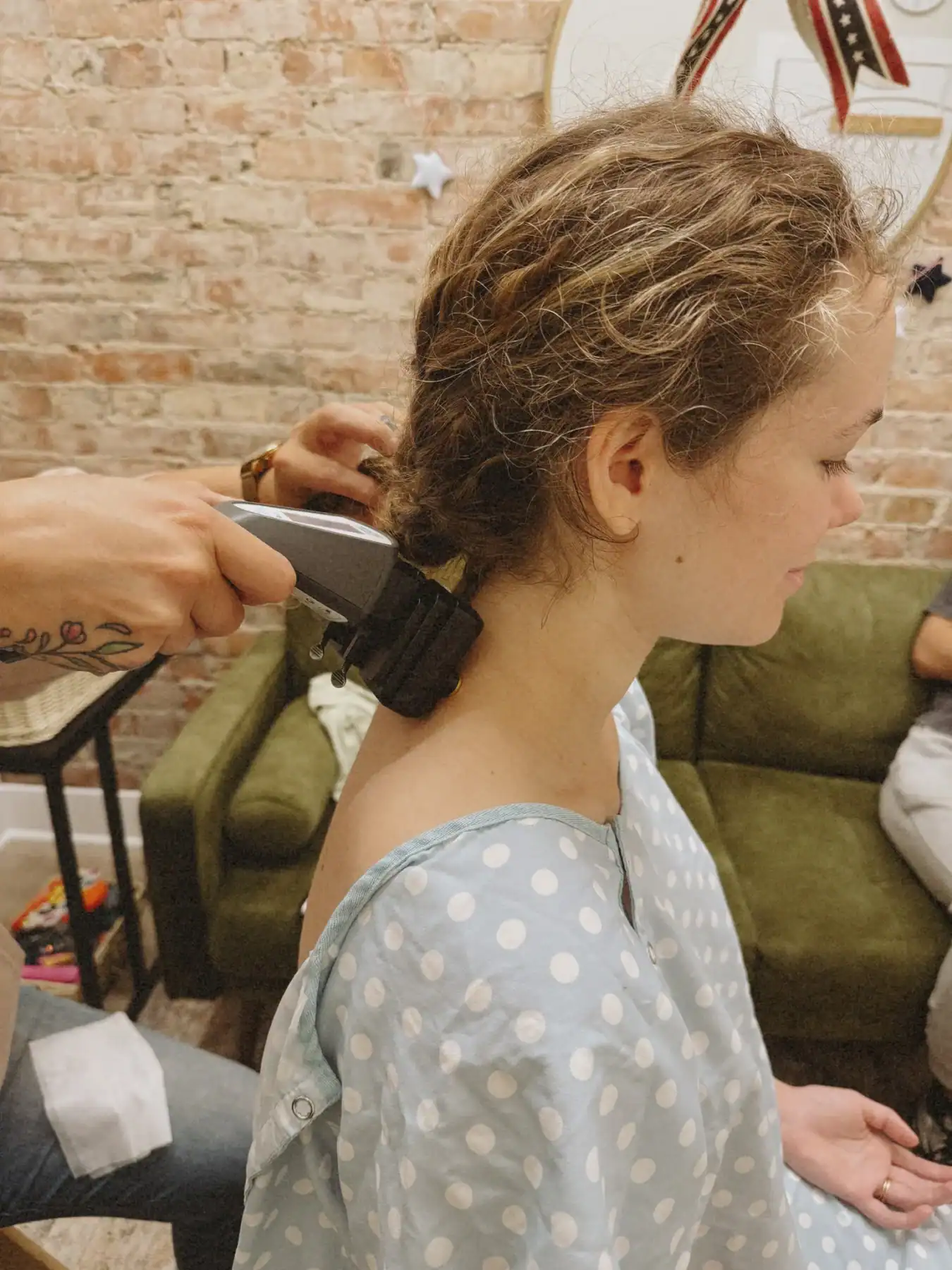
Screens are not going away, and treating them as the enemy tends to shut down the conversation with a teenager fast. The useful question is narrower: what does the position do to a growing neck?
It’s also worth saying that screens are rarely the whole story. If phones alone caused this, every teenager with a phone would have the same symptoms, and they don’t. What usually shows up in the office is a layered picture: birth history, earlier injuries, illness and antibiotic history, sleep debt, competitive sport, and academic stress, with heavy screen use landing on top of all of it. The phone is often the most visible stressor rather than the only one, which is why removing it rarely resolves everything on its own.
What is Text Neck in Teenagers?
Text neck is a postural pattern that develops from holding the head forward and down for long stretches during phone, tablet, or laptop use. A biomechanical model published in Surgical Technology International estimated the load this creates. In a neutral position, an adult head places roughly 10 to 12 pounds of force on the cervical spine. Tilted forward 15 degrees, that rises to about 27 pounds. At 30 degrees, about 40 pounds. At 60 degrees, the angle most people settle into while scrolling, the modeled figure reaches about 60 pounds.
Two honest caveats. This was a mathematical model, not a direct measurement, and it was built around adult head weight. A teenager’s head is lighter, so the absolute numbers are smaller. The proportional relationship is the point: the further forward the head travels, the steeper the load climbs.
Now apply that load repeatedly. According to national survey data from the National Center for Health Statistics, about half of teenagers ages 12 to 17 report four or more hours of daily screen time, and that figure excludes schoolwork. Muscles that stay shortened adapt to being short. Ligaments held at end range stop returning to their original length. The natural forward curve of the cervical spine, which exists to absorb and distribute load, can begin to flatten.
Why Parents Should Look Past Posture
Forward head position and rounded shoulders reduce the room available in the chest cavity. Research comparing people with forward head posture to those with neutral posture has found measurably lower scores on standard breathing tests, though the studies involved small groups of young adults rather than teenagers, and the size of the effect varies. The direction of the finding is consistent even where the magnitude isn’t settled.
The same postural shift is worth understanding in the context of nervous system function. The vagus nerve, a major pathway involved in heart rate, digestion, and emotional regulation, runs down the neck alongside the cervical spine within the carotid sheath, and continues into the chest. Chronic tension through this region sits close to structures that matter well beyond posture.
Signs Your Teen May Need a Nervous System Check
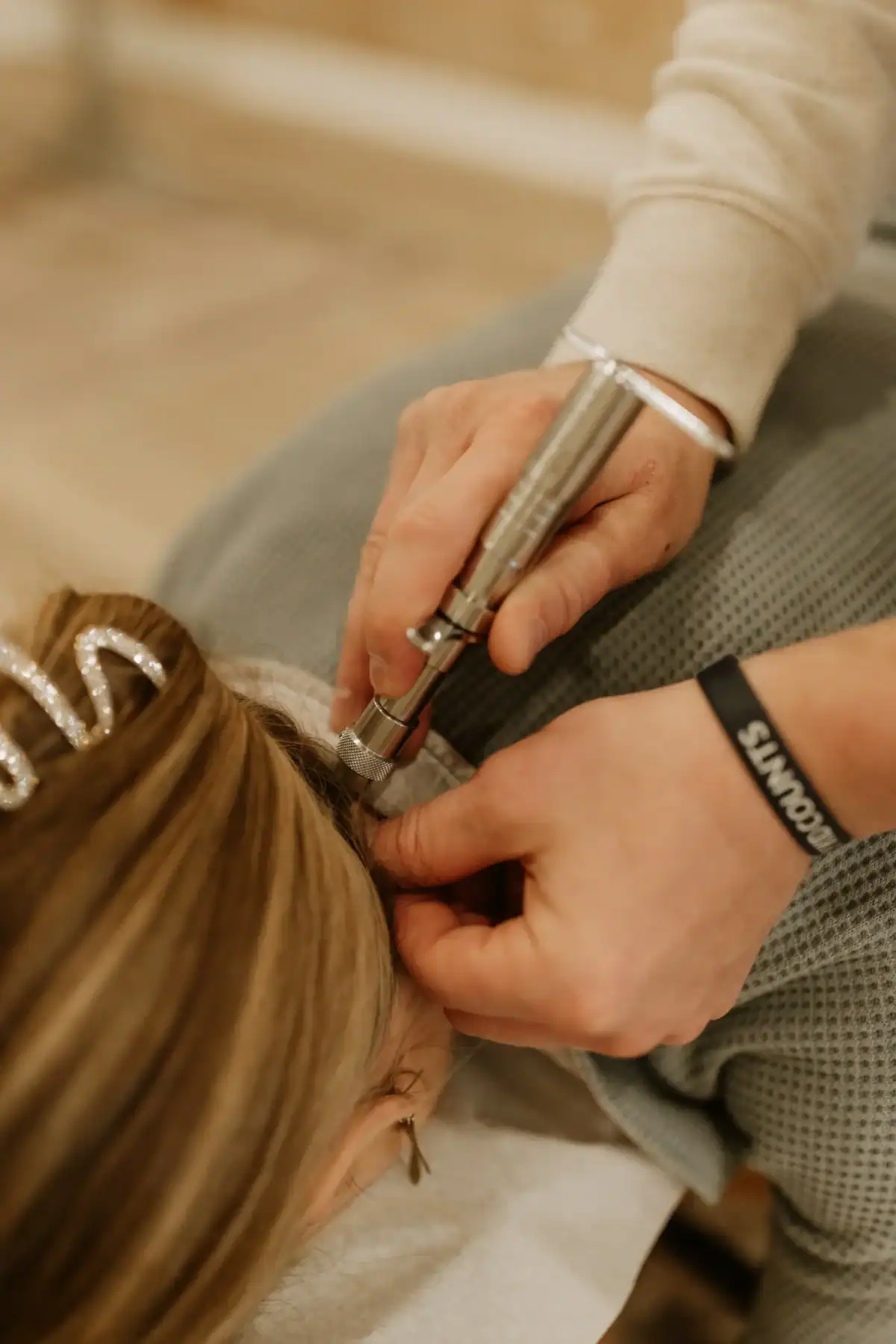
Some of this genuinely is growing pains and normal adolescent fatigue. The signs worth acting on tend to cluster.
Physical Signs
- Neck or upper back stiffness that doesn’t clear with rest
- Frequent headaches, particularly at the base of the skull or across the forehead
- One shoulder visibly higher than the other
- One hip riding higher when standing or sitting
- Posture that doesn’t change even when your teen is reminded
Functional and Behavioral Signs
- Fatigue that persists through eight or nine hours of sleep
- Trouble concentrating at school or on homework
- Irritability or mood shifts with no clear trigger
- The same sports injury recurring in the same place
Headaches are among the most commonly reported adolescent health complaints, and the cause is often assumed rather than assessed. Cervicogenic headaches (those originating from tension and restriction in the neck) are frequently passed over in favor of dehydration or stress. When headaches cluster at the base of the skull, behind the eyes, or across the temples, and they’re worse after a long stretch of screen time, the cervical spine is worth examining.
One pattern deserves separating out. Everything above builds gradually, over months or seasons. If your teen changed abruptly instead, such as new tics, obsessive behaviors, rage or severe anxiety appearing within days, especially following an illness, that is a different presentation and it belongs with your pediatrician first.
Sudden-onset neuropsychiatric changes after infection are a recognized clinical picture with its own workup. Chiropractic care may have a supporting role afterward, but it is not the right first call, and any office that tells you otherwise is getting ahead of itself.
Backpacks deserve their own line. The American Academy of Pediatrics advises that a backpack shouldn’t exceed 15% of a child’s body weight, and recommends both straps, worn evenly. A teen who hikes one shoulder to carry a bag is reinforcing an asymmetry every school day. Sleep is the other place these patterns surface first; natural sleep remedies for kids walks through what a dysregulated nervous system looks like at bedtime.
Is Chiropractic Care Safe for Teenagers?
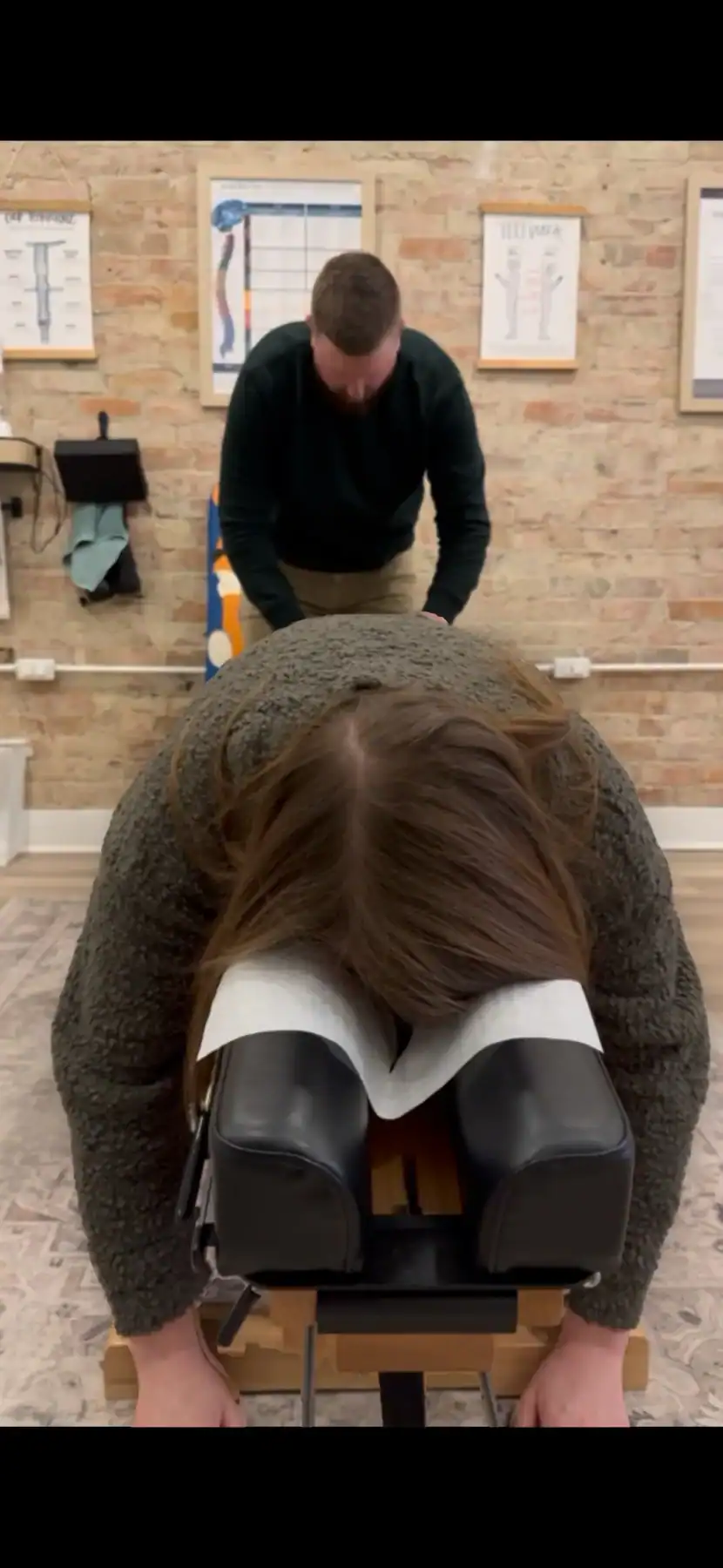
Yes, and it’s common. More than 35 million Americans, adults and children, see a chiropractor each year, according to the American Chiropractic Association. Parents frequently ask whether a 14-year-old can be seen, and the answer is yes, with a parent or guardian’s written consent, which is required before any care begins. In most cases, no physician referral is needed, though that varies by state and by insurer arrangement, so it’s worth confirming locally.
What changes is the delivery. Adjustments for teenagers use noticeably less force than adult care. Depending on the teen’s size, age, and presentation, that may mean lighter manual contact, instrument-assisted adjusting, or specific positioning. Nothing about the approach is the forceful, high-velocity version people picture. The aim is the same as adult care: support proper spinal alignment and reduce interference in nervous system communication. The method is calibrated to a skeleton that hasn’t finished growing.
It’s equally worth saying what this is not. Chiropractic care is not a substitute for emergency medical care, surgical evaluation, or the work of your teen’s pediatrician, therapist, or counselor. It’s designed to run alongside that team, not in place of it, and for families already working with a physical therapist, counselor, or specialist, the useful framing is a missing layer rather than a replacement for anything.
Teen Athletes: Movement Quality Before Injury
Teen athletes carry a specific combination of risks. Bones are still growing, training volume often ramps up faster than tissue can adapt, and competitive pressure pushes many to train through discomfort rather than flag it. The result is a high rate of overuse patterns: stress reactions, tendinitis, shoulder impingement, IT band irritation, low back strain. That strain builds quietly and then sidelines an athlete for weeks.
A spine and pelvis that move well let the body distribute load evenly. When one hip sits higher, or the thoracic spine rotates unevenly, tissue on one side takes more than its share. That imbalance rarely announces itself as an injury right away. It shows up first as a compensation pattern.
This is why a sports-focused visit is as much assessment as adjustment. Posture, gait, joint mobility, and movement symmetry get evaluated together, with the goal of catching compensations while they’re still just compensations. Proprioception, the body’s sense of where it is in space, is part of the same picture, since restricted spinal movement affects the quality of that positional feedback.
Daily Habits That Support Your Teen’s Spine
Care works better when the other 23 hours of the day aren’t undoing it.
- Raise the screen, don’t lower the head: Phone at chest or eye height, laptop on a stand with an external keyboard. This single change removes most of the forward-tilt load.
- Cap the backpack at 15% of body weight, both straps, weight low: Heaviest items closest to the back. Weigh it once — most families are surprised.
- Move every 30 minutes: Stand, roll the shoulders back, look at something across the room. Frequency matters more than duration.
- Sleep on the back or side, not the stomach: Stomach sleeping holds the neck rotated for hours. A pillow that fills the gap between ear and shoulder keeps things neutral.
- Get devices out of the bedroom before bed: This does more for a wired nervous system than almost anything else on this list.
What to Expect at Your Teen’s First Chiropractic Visit
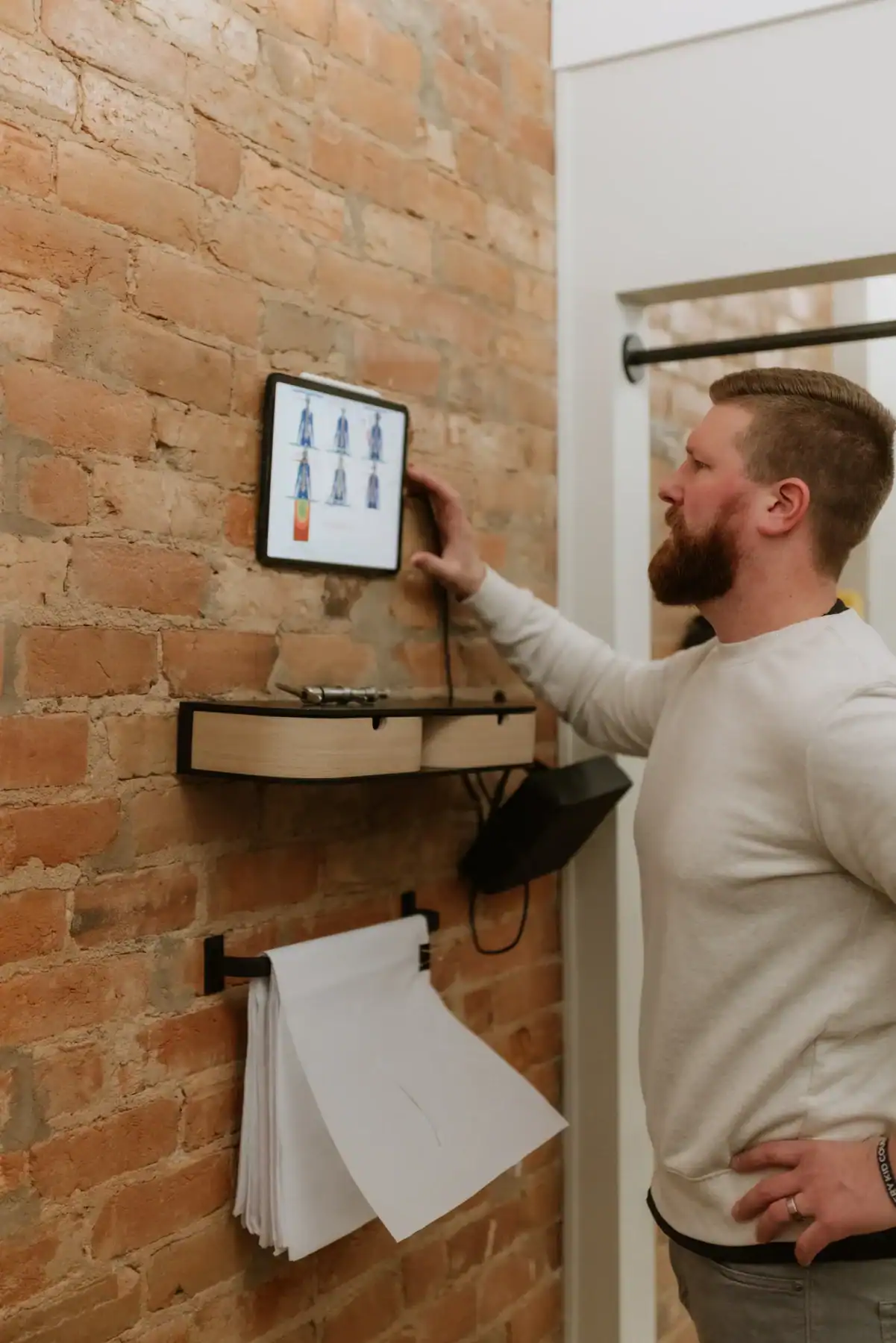
The first appointment is an evaluation, not just an adjustment.
It opens with a detailed history: symptoms and when they started, previous injuries, sports participation, screen habits, backpack use, sleep. That context shapes everything after it.
A postural assessment follows: how your teen stands, moves, and carries their head, then spinal palpation to find areas of restriction and tension.
Then comes the part that matters most for a screen-time conversation: we measure rather than estimate. At Adjusted Living, every teen is scanned with INSiGHT technology, developed by the Chiropractic Leadership Alliance, which combines heart rate variability, surface EMG, and rolling thermography.
The surface EMG component is particularly relevant here because it reads the electrical activity of the postural muscles running alongside the spine, the exact muscles a forward-head position overworks. Instead of guessing how much a teenager’s posture is costing them, you get a picture of where muscle tone is out of balance and how much energy is being spent just holding the head up. The heart rate variability reading then shows how much capacity the nervous system has left for recovery.
This matters for a teenager who insists they feel fine. A scan gives you something objective to look at together, and a baseline to compare against later. “What is an INSiGHT scan?” explains what each of the three measures shows in more detail.
The visit closes with a report of findings, where Dr. Ryan walks the family through the results and a recommended approach. If an adjustment happens at that first visit, it will be gentle. Some teens notice a change quickly; for others it’s gradual across a series of visits, and there’s no way to predict which in advance. The full sequence is laid out on our care plan page.
One thing that consistently matters: teens do better when they’re part of the conversation rather than the subject of it. Encourage yours to ask questions directly.
Your teen’s spine is still being built, and the habits and patterns forming right now are the ones they’ll carry into adulthood. If something in this article sounded familiar — the headaches, the fatigue that sleep doesn’t touch, the shoulder that always sits higher — it’s worth having someone look at it properly rather than waiting to see if it passes.
Families across Porter County and northwest Indiana come to our chiropractor in Chesterton for neurologically focused care built around what a growing nervous system actually needs.
Request an appointment to get started.
FAQs About Chiropractic Care for Teenagers
Can a 14-year-old see a chiropractor without a referral?
In most cases, yes. A referral is not typically required, though requirements can vary by state. A parent or guardian must provide consent for any patient under 18, and a full intake and exam are completed before care begins.
How is an adjustment different for teenagers compared to adults?
It uses less force and is adapted for a developing skeleton. That may mean instrument-assisted adjusting or gentler manual contact depending on the teen’s age, size, and presentation. The goal is unchanged; the method is modified.
Can chiropractic care help with teenage anxiety and mood?
Chiropractic care does not address anxiety as a diagnosis, and it isn’t a replacement for counseling or a pediatrician’s involvement. What it addresses is nervous system regulation, whether the body can shift out of a stress response and into recovery. Some families report improvements in mood and sleep alongside care; others don’t, and we won’t promise otherwise.
What causes headaches in teenagers, and can a chiropractor help?
Many adolescent headaches are cervicogenic, meaning they stem from tension and restriction in the neck, often aggravated by prolonged screen posture. A chiropractor can assess whether there’s a structural component and address it with adjustments and soft tissue work. Whether that changes headache frequency depends on the individual and on what else is contributing.
How often should a teenager see a chiropractor?
It depends entirely on the findings. A teen with significant postural changes or frequent headaches may start more frequently and taper. A teen using care proactively for sport or general wellness may come far less often. The schedule follows the assessment, not a template.
