

If you’re a parent trying to figure out where the line is with teens and technology, you’re not alone, and you’re asking the right questions. The real issue isn’t whether your teen uses screens. It’s what chronic, unbalanced use does to a still-developing nervous system, leading to nervous system dysregulation. Technology isn’t the enemy. Unexamined, unbalanced use is where the real risks live. This guide walks you through what the research shows, what to watch for, and what actually helps.
How and Why Teenagers Use Technology Today
Nearly half of all teenagers are online almost constantly. According to a Pew Research Center survey, 46% of teenagers report being on the internet almost constantly; nearly double the 24% reported in 2014-2015, showing just how central technology has become in daily life for teens.
The platforms pulling their attention aren’t random. YouTube, TikTok, Instagram, and Snapchat dominate, each designed to deliver fast rewards: a funny clip, a like, a message from a friend. Teens aren’t on these platforms because they’re distracted or lazy. They’re on them because these apps speak directly to what adolescence is neurologically wired for: connection, identity, belonging, and novelty.
A teenager scrolling TikTok at midnight isn’t necessarily doing something wrong. They’re looking for the same things teens have always looked for: to feel seen, to belong, to figure out who they are. Technology just happens to offer all of that in a pocket-sized device.
This matters for how parents enter the conversation. Coming in with alarm or contempt tends to close doors. Understanding why teenagers and technology are such a natural fit, and where that relationship can go sideways, is a more useful starting point.
The Real Benefits of Teens and Technology Use

The relationship between young people and technology isn’t defined only by risk. There are real, meaningful benefits, and dismissing all screen time as harmful can actually backfire.
Adolescent technology use, when intentional, supports creative expression. Teen musicians post original songs on YouTube. Young artists build audiences on Instagram. Students access free educational content on platforms that didn’t exist a decade ago. Some teens are learning to code, start small businesses, or develop skills that translate directly into career paths.
Technology also creates space for connection that some teens can’t access in their physical environment. A teen who feels like an outsider at school might find a community of people who share their passion for astronomy, storytelling, or niche music. For a teen navigating social anxiety, that online community can be a genuine lifeline, offering belonging and low-stakes connection while their confidence builds. That connection is real, and it matters.
Parenting coach Kristen Duke, who works with moms on building trust and communication with their teens, notes that when parents stay curious and communicative rather than reactive, teens are more likely to bring their online experiences back to the family. When parents stay genuinely curious and communicative rather than reactive, teens are more likely to bring their online experiences, including the hard ones, back to the family. The key is communication, not surveillance or blanket restriction, but genuine conversation.
The clearest examples of beneficial teen technology use tend to share a few things in common: they involve creating something, connecting with a purpose, or learning a skill. A teen who builds a small following around her handmade jewelry is developing entrepreneurial confidence and a sense of identity rooted in what she makes, not just what she consumes. A student who uses YouTube tutorials to understand calculus concepts that his teacher rushed past is filling real educational gaps and building self-directed learning that serves him long after school ends. These aren’t edge cases, and they’re worth acknowledging before the harder conversation begins.
What Are the Real Risks of Technology for Teens?
The risks are real. They’re just not evenly distributed, and they’re not your teen’s fault alone.
Sleep disruption is one of the most documented consequences of teen technology use. Screen light suppresses melatonin, and the emotional pull of social media keeps brains activated when they should be winding down. Teens who sleep less struggle more with focus, mood regulation, and resilience.
Social comparison, cyberbullying, and the pressure of curated online identity all feed a cycle of stress that a developing nervous system isn’t built to handle. Exposure to exploitative content is another risk parents often underestimate, and it’s worth addressing directly with teens rather than hoping they won’t encounter it.
Here’s what makes this especially worth understanding: much of this is by design. A study led by Harvard T.H. Chan School of Public Health found that six major social media platforms generated nearly $11 billion in advertising revenue from youth users ages 0-17 in 2022 alone. They’re built around capturing attention. When your teen can’t put the phone down, that’s partly the result of engineering, not a character flaw.
Technology compulsion (that feeling of being unable to stop scrolling even when they want to) is a signal worth paying attention to. The nervous system of a teenager is still forming, and parents who recognize the symptoms of nervous system dysregulation may see some of these patterns in their teens. The sympathetic nervous system gets activated repeatedly with no real threat to respond to, and over time, it can get stuck there. When that happens, teens may struggle to wind down, focus, sleep, or feel emotionally regulated; not because they’re being difficult, but because their nervous system has been conditioned toward constant stimulation.
How Much Screen Time Should Teens Actually Have?

There’s no magic number, and most health professionals have moved away from rigid hourly limits in favor of a more practical framework.
The old “two hours a day” guideline was developed before smartphones existed and doesn’t reflect how teens actually use technology now. What matters more than total minutes is whether screen use is getting in the way of healthy development.
Ask these questions instead: Is it disrupting sleep? If your teen is staying up past midnight on a device, that’s a problem regardless of how many hours they’ve logged. Is it replacing physical activity, face-to-face time, or schoolwork? Passive scrolling that crowds out movement, conversation, and learning is a different concern than active use for creating or communicating.
There’s also a meaningful distinction between types of use. A teen spending two hours editing a short film is engaging very differently from a teen spending two hours in passive, mindless scrolling.
Understanding how technology affects teens means recognizing that context matters more than clock time. Current guidance from pediatric health organizations supports this shift, focusing on consistency, limits around sleep, and quality of use rather than a single daily number. The goal isn’t to reduce screen time to zero. It’s to ensure screens aren’t crowding out the things a developing brain actually needs.
6 Strategies for Parents: Managing Teen Technology Use Without Losing the Relationship
Parents often come to our chiropractor in Chesterton, Indiana, after trying everything: confiscating devices, setting timers, downloading parental controls, and still watching their teen’s anxiety, sleep issues, or emotional dysregulation worsen. The insight that changes things is understanding that for many teens, compulsive technology use isn’t a discipline problem. It’s often a nervous system problem, and addressing that root cause is what finally moves the needle.
Author and youth culture expert Jonathan McKee, who has spent more than 20 years working with parents and teens, argues that the goal isn’t to police your teen’s digital world: it’s to guide them toward managing it wisely.
Here are six strategies that actually work:
1. Model What You’re Asking For
If you want your teen to put the phone down at dinner, you go first. Teens watch what adults actually do, not what they say.
2. Stay Curious, Not Suspicious
Know what your teen is using and why; not to surveil them, but to stay connected. Ask them to show you what they’re watching. Play the game with them. Shared curiosity keeps the relationship open.
3. Talk Openly About Exploitative Content
Pornography, predatory accounts, and manipulative influencers are part of the online world your teen is navigating. A direct, non-shaming conversation gives them language to process what they encounter. Starting with “I know you’re going to run into things online that are uncomfortable, and I want you to be able to talk to me about it” lowers the defensive wall considerably.
4. Set Limits Early and Collaboratively
Limits set before a habit forms are far easier to maintain than those introduced reactively. Where possible, involve your teen in setting them. They’re more likely to respect limits they helped create.
5. Help Teens Understand How Platforms Work
These apps are engineered to keep them scrolling. That’s not a conspiracy theory; it’s a business model. A teen who understands this is better equipped to make intentional choices about how and when they engage.
6. Know When to Seek Professional Support
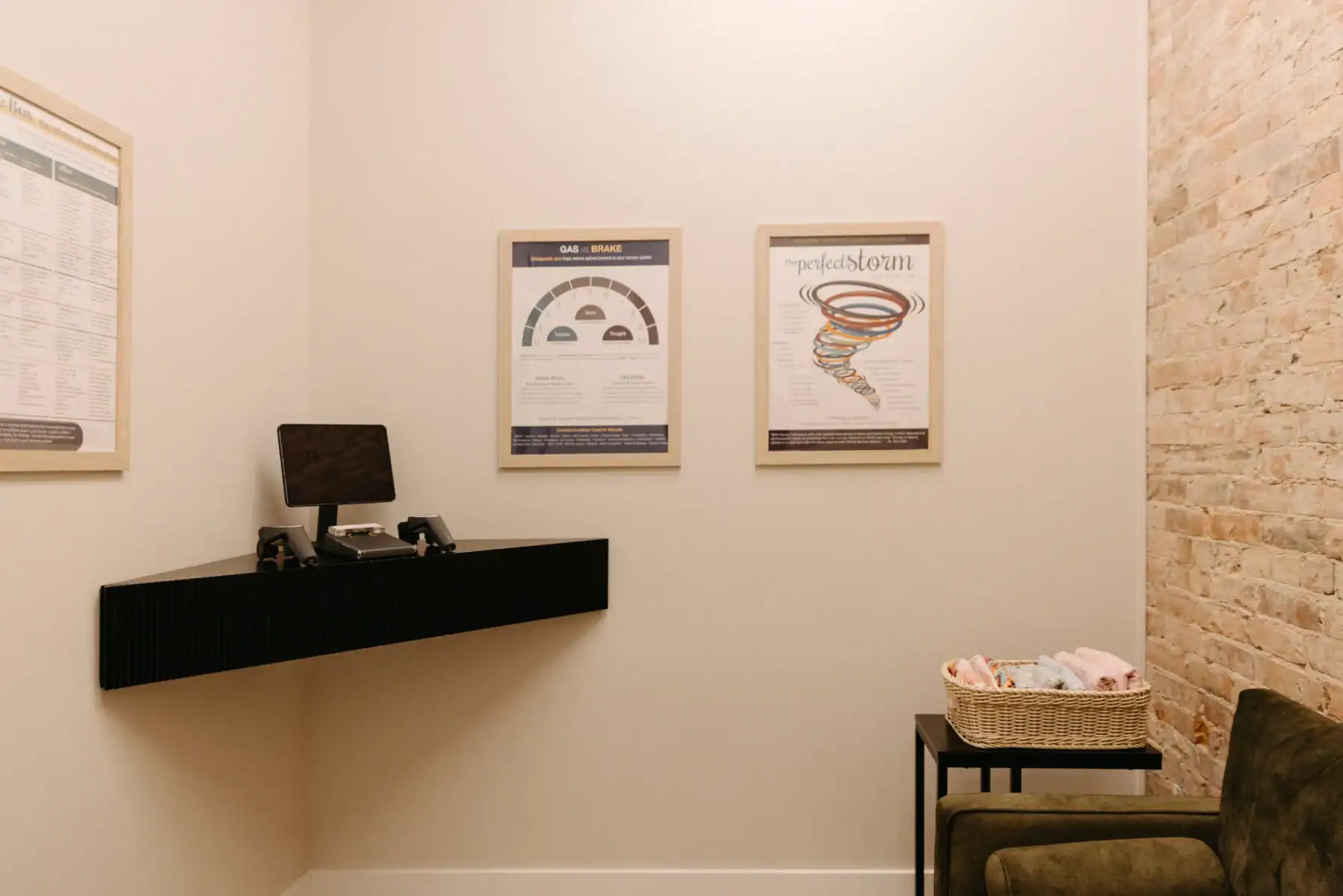
If technology use is driving anxiety, sleep loss, emotional outbursts, or social withdrawal, restriction alone won’t fix it. When a teen’s nervous system is chronically overstimulated, it’s often seeking regulation through screens because it has no other reliable outlet.
Exploring natural approaches to childhood anxiety can help parents understand the full range of drug-free options available before jumping to medication. Dr. Ryan Angelo and the team at Adjusted Living use INSiGHT scans to detect and measure nervous system dysregulation, building care plans focused on restoring balance rather than simply managing surface behavior.
When to Seek Support: Recognizing the Signs That Technology Use Has Become a Problem
Heavy technology use is normal for teens. Compulsive, dysregulating use is different, and the distinction matters.
Watch for these signs that something more than typical screen habits may be happening:
- Extreme irritability or emotional meltdowns when devices are taken away
- Significant sleep deprivation that isn’t improving
- Declining grades or sudden loss of interest in school
- Withdrawing from family, in-person friends, or activities they used to enjoy
- Physical symptoms like headaches, fatigue, or stomach issues tied to screen use
- Anxiety, restlessness, or inability to focus when offline
These aren’t signs that your teen is a bad kid or that you’ve failed as a parent. They’re often signs that the nervous system is dysregulated and struggling to find balance on its own. In some cases, what looks like technology compulsion has roots in sensory processing differences. Understanding sensory issues in kids can help parents recognize whether this is a factor. Taking the device away without addressing that underlying need won’t resolve the pattern. It will often just shift it.
Approaching this with compassion rather than punishment opens the door to real change. That may mean working with a counselor, exploring neurologically focused chiropractic care, or both. The goal is to support the nervous system’s ability to regulate, not just eliminate the behavior.
At Adjusted Living Chiropractic in Chesterton, Dr. Ryan Angelo is PX Docs certified and specializes in neurologically focused care for teens and children. If your teen is struggling with anxiety, overstimulation, or behaviors that technology seems to be making worse, explore our care plan to see how nervous system support might help. Your child’s brain is built to thrive, and with the right support, they can get there.
Request an appointment to get started.
FAQs About Teen Technology Use

How do teenagers use technology differently than adults?
Teens use technology primarily for social connection, identity exploration, and entertainment. Unlike adults who often use devices for productivity, teens are in a developmental stage where peer approval and belonging are neurologically amplified, making social platforms especially compelling. A teen scrolling Instagram isn’t just killing time. They’re navigating one of the most socially complex periods of their lives, and technology has become a primary venue for that.
Why do teenagers use technology so much?
Teens’ brains are wired for novelty, social reward, and stimulation, all of which tech platforms are engineered to deliver. It’s not laziness or defiance. It’s a neurological match between developmental needs and platform design. The teenage brain is particularly sensitive to social feedback, and apps are built to exploit exactly that sensitivity through likes, comments, and constant content refresh.
How much screen time should a 13-17 year old have?
Most health organizations now suggest focusing less on a specific number and more on whether screen use is disrupting sleep, physical activity, schoolwork, or in-person relationships. If it is, that’s where limits need to come in, regardless of total minutes. The better question is whether their screen use is supporting or getting in the way of a healthy, balanced life.
Can chiropractic care help with teen anxiety related to technology?
Neurologically focused chiropractic care supports a well-regulated nervous system, which is foundational to emotional regulation, focus, and resilience. When teens are chronically overstimulated by screens, the nervous system can become dysregulated. Chiropractic care may support the body’s ability to return to a balanced state, not by addressing anxiety as a diagnosis, but by supporting the underlying nervous system function that shapes how teens respond to stress.
Key Takeaways: The Effects of Technology on Teens
- 46% of teenagers report being online almost constantly, and the platforms they use are engineered to capture attention, not support wellbeing.
- Technology isn’t inherently harmful to teens; the risks come from chronic, unbalanced use that disrupts sleep, focus, emotional regulation, and real-world relationships.
- Compulsive technology use in teens is often a nervous system signal; the brain is seeking stimulation because it’s stuck in a state of dysregulation, not simply a discipline problem.
- Effective parenting around teen tech use starts with curiosity and conversation, not just restrictions, and works best when it addresses root causes alongside surface behaviors.
- When technology use is accompanied by anxiety, sleep loss, or emotional dysregulation, professional support focused on nervous system function can be a meaningful part of the solution.
