

Natural colic relief looks different for every family, but most strategies fall into one of four categories: physical soothing, dietary adjustment, gut support, and nervous system care. If your baby cries for hours and nothing seems to help, colic may be the cause. Those stretches of inconsolable evening crying are as exhausting as they sound. This guide walks through nine strategies, ordered from most universally accessible to most specialized, so you can start where it makes the most sense for your baby.
What is Colic? Does Your Baby Have It?
Colic follows the “3-3-3 rule”: crying for 3 or more hours per day, at least 3 days per week, for 3 or more weeks in an otherwise healthy infant. According to StatPearls via the NCBI Bookshelf, infantile colic affects nearly 20% of newborns and infants, making natural colic relief options an important topic for many parents.
Common colic causes include an immature digestive system, nervous system immaturity, and gut microbiome imbalance. Because colic symptoms overlap with reflux and food allergy, a quick comparison helps:
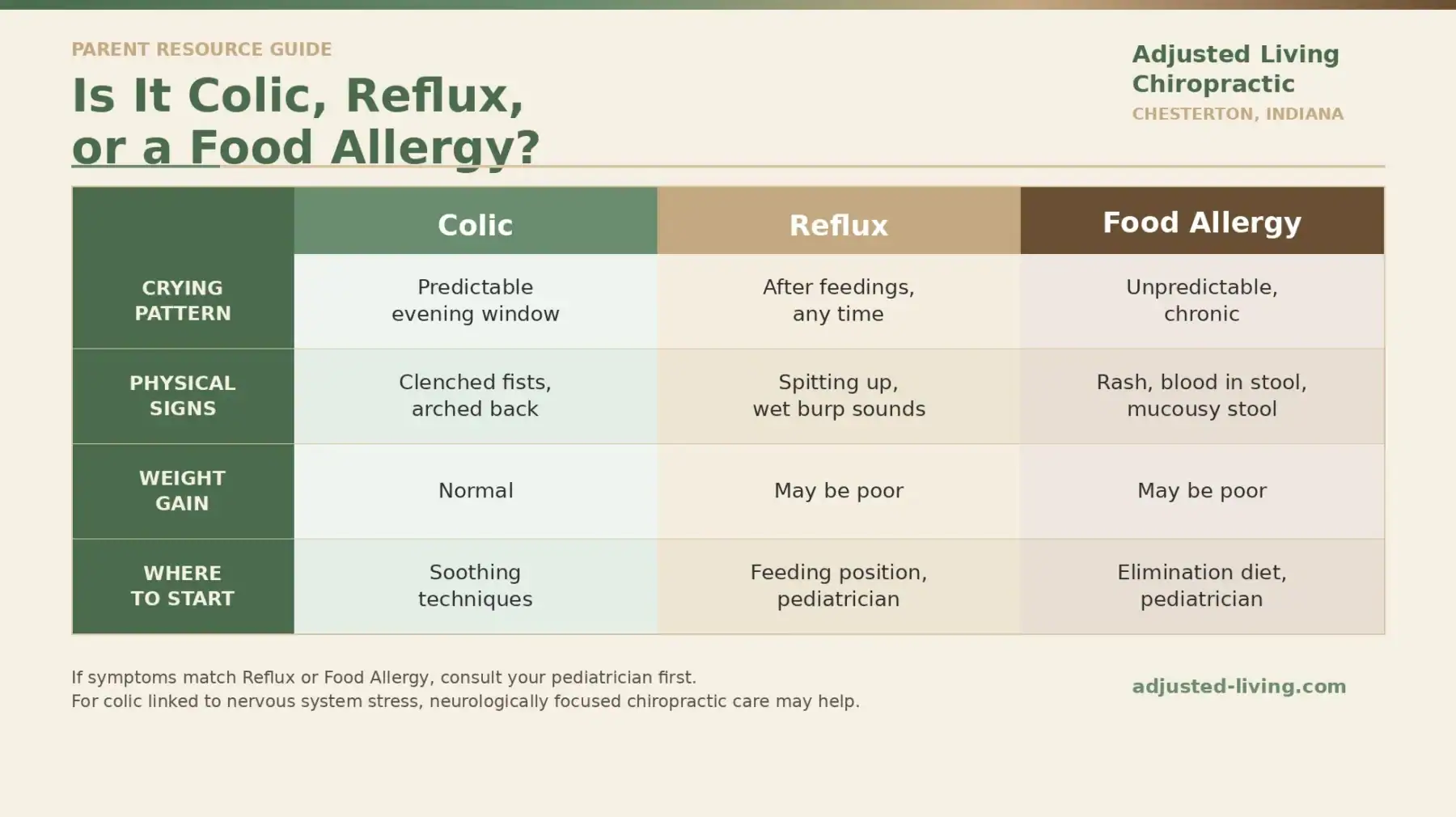
If your infant has symptoms that align with the right two columns, start by looping in your pediatrician before moving through this list. Colic typically peaks around 6 weeks of age and resolves on its own by 3 to 4 months. These strategies are designed to make that window more manageable.
How These 9 Natural Colic Relief Remedies Were Selected
These nine options were chosen based on clinical evidence, ease of use at home, and confirmed safety for newborns. They’re ordered from most universally effective to most specialized; starting at the top helps parents avoid over-intervening before simpler approaches have had a fair chance. Work through them in sequence so each layer builds on the last.
1-4: Physical Soothing Techniques to Try First
Four hands-on methods offer immediate help for soothing a colicky baby: swaddling, repetitive gentle motion, upright holding after feeding, and tummy-time massage.
1. Swaddling

Wrapping your baby snugly in a lightweight blanket mimics the womb, reducing the startle reflex that can intensify crying. Keep arms tucked, hips loose, and always place a swaddled baby on their back.
2. Repetitive Gentle Motion
Rocking, bouncing on a yoga ball, or a short car ride provides rhythmic input that calms an overstimulated nervous system. Pair motion with consistent white noise to reinforce the settling effect.
3. Upright Holding After Feeding
Hold your baby upright against your chest for at least 20 minutes after each feeding. This position helps gas move through the digestive tract and reduces reflux-related discomfort.
4. Tummy-Time Massage
With your baby lying face-up on your lap, use two fingers to make slow clockwise circles on the abdomen. Clockwise follows the natural direction of digestion and helps relieve trapped gas.
A note on feeding environment: for bottle-fed babies, tilt the bottle so milk fills the nipple completely to reduce air intake, and pause every ounce or so to burp. These adjustments can noticeably reduce colic rooted in gas buildup.
5-6: Dietary Changes That May Ease Colic Symptoms

Relieving colic often starts with what goes into the baby’s system. These two approaches address the most common dietary contributors.
5. Breastfeeding Mother’s Diet
Dairy, caffeine, and cruciferous vegetables like broccoli can transfer through breast milk and contribute to gas and fussiness. Eliminate one category at a time and allow a full two weeks before drawing conclusions, since food proteins can remain in breast milk for several days.
6. Formula Changes
For formula-fed babies, a hydrolyzed or hypoallergenic formula breaks proteins into smaller fragments that are easier to digest. Discuss this approach with your pediatrician before switching.
On gripe water: most products are unregulated, ingredients vary widely, and a 2015 safety review raised concerns about contamination and inconsistent formulations. Caution is warranted until better evidence exists.
7: Probiotics and Gut Health for Colicky Babies
Research increasingly points to gut microbiome differences as a factor in infant colic. Colicky infants tend to have lower levels of beneficial bacteria compared to non-colicky peers, making gut health a real target for natural colic relief.
The strain with the strongest evidence is Lactobacillus reuteri. Research published on PubMed found that in breastfed colicky infants, Lactobacillus reuteri significantly reduced crying time, with many infants in the probiotic group achieving a 50% or greater reduction in daily crying within the first week, compared to placebo.
Liquid drops are easier to administer than powder for newborns, and giving probiotics shortly before a feeding may improve colonization. These are still evolving options, so consult your pediatrician for strain-specific guidance.
8-9: Nervous System Support and When to See a Specialist

Some cases of colic have a physical root that home approaches cannot reach on their own.
8. Nervous System Care and Pediatric Chiropractic
Birth can place significant mechanical stress on a newborn’s neck and upper spine, sometimes contributing to nervous system dysregulation that shows up as inconsolable crying. This compression or irritation along the vagus nerve can keep an infant’s system locked in a state of heightened reactivity that soothing techniques alone cannot fully resolve.
Understanding what to expect when you bring your baby to a chiropractor can help you make this decision with confidence. Dr. Ryan Angelo, DC, of Adjusted Living Chiropractic holds PX Docs certification; it’s the only neurologically focused pediatric chiropractic credential in the Chesterton/Porter County area. Dr. Ryan brings more than 7 years of experience leading pediatric chiropractic care using a drug-free, non-invasive approach, including complex infant cases where conventional options had not provided answers.
9. When Home Approaches Are Not Enough
Try home strategies consistently for two weeks. If crying is worsening, your baby is not gaining weight, or symptoms match the reflux or allergy column in the chart above, it is time to escalate. Reach out to your pediatrician, a lactation consultant if breastfeeding, or a pediatric chiropractor trained to assess nervous system function.
Many families find the best outcomes using all three in combination. You are not alone in this, and you don’t have to keep guessing. Read real stories from families in Chesterton who found answers when nothing else had worked.
Key Takeaways
• Colic affects nearly 20% of infants and is defined by the 3-3-3 rule. Distinguishing it from reflux or food allergy helps you choose the right approach sooner.
• Physical soothing techniques like swaddling, upright holding, and tummy massage are the safest and most accessible starting points for most families.
• Dietary changes, including a breastfeeding elimination trial or hydrolyzed formula, can reduce symptoms linked to food sensitivities.
• Lactobacillus reuteri probiotics have clinical evidence supporting reduced crying time in breastfed colicky infants, making gut health a real target for natural colic relief.
• When two weeks of home strategies have not helped, nervous system evaluation by a PX Docs-certified pediatric chiropractor in Chesterton is a safe, drug-free next step worth considering.
Ready to get answers? If your baby has been struggling and you’re not sure where to turn next, request an appointment at Adjusted Living. Dr. Ryan would love to help your family find relief.
