

A baby chiropractic adjustment is a light, sustained fingertip pressure applied to a specific spot on a newborn’s spine to reduce nerve interference and support healthy nervous system function. There is no twisting, no cracking, and no force. Most babies sleep through it. This article walks you through exactly what an adjustment looks like, why birth creates the tension it addresses, how co-regulation between you and your baby fits in, and how to choose the right chiropractor in Chesterton, Indiana and other regions.
What Happens During a Baby Chiropractic Adjustment?
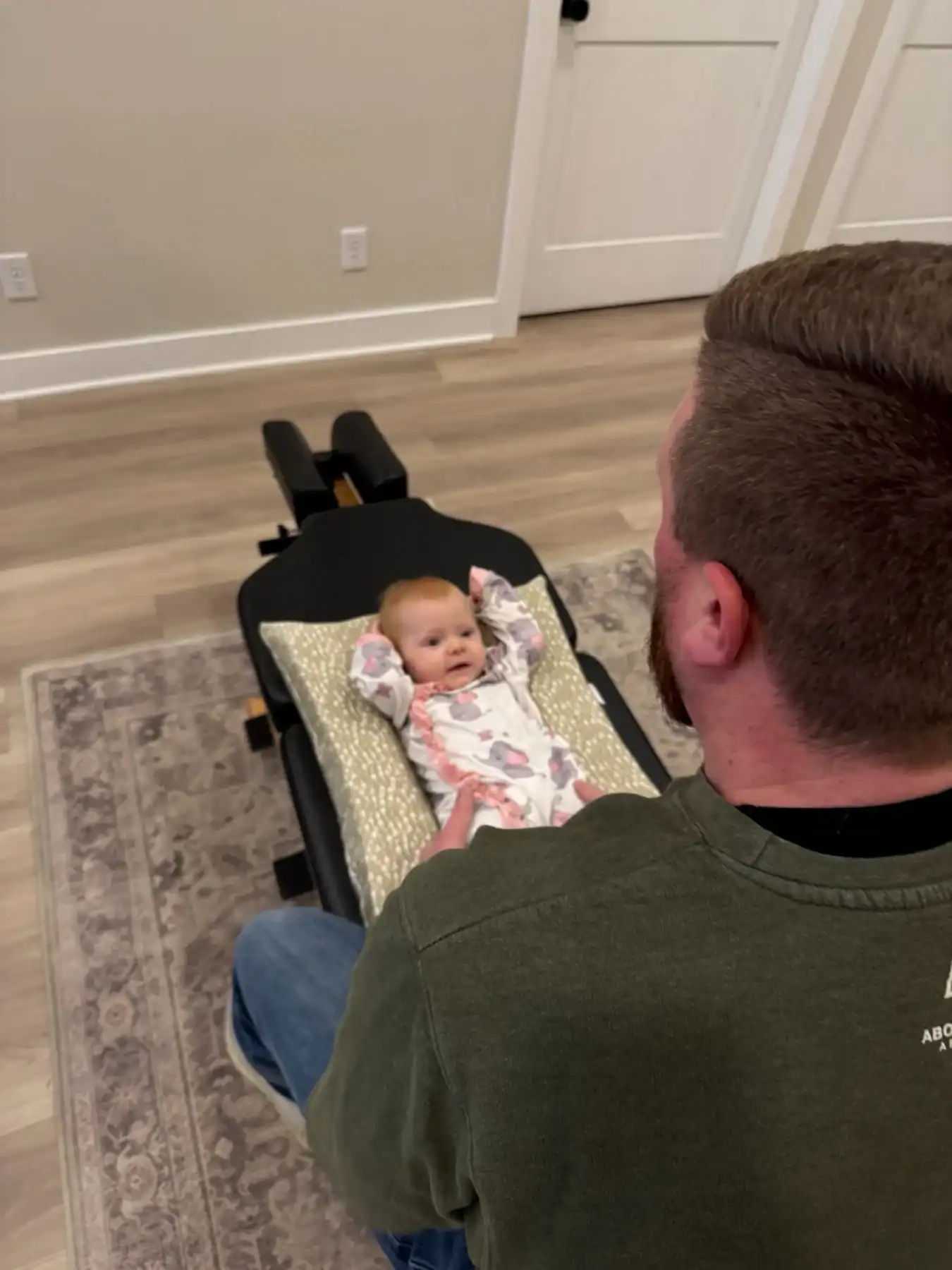
The pressure involved is comparable to what you would use to test whether a tomato is ripe. That is it. Light, targeted fingertip contact applied to specific areas of the spine, nothing more.
It looks nothing like an adult adjustment. There is no high-velocity thrust, no audible pop, no rotation of the neck. In practice, it often looks like a chiropractor resting one finger on a segment of your baby’s spine and holding steady pressure for a few seconds.
Think of a newborn’s spine like a brand-new garden hose. It is flexible and resilient, but it can still develop kinks. Those kinks, caused by the physical demands of birth or early development, can affect how well the water flows. In chiropractic terms, that flow is nerve communication between the brain and body.
The adjustment itself is also only one part of the visit. A session includes assessing spinal alignment, checking for muscle tension, observing how your baby moves and holds their head, and identifying areas where nerve function may be restricted. If you want a broader look at this type of provider first, our guide to what a pediatric chiropractor does covers training, credentials, and techniques in more detail.
This is a hands-on, drug-free approach. The goal of this article is to give you clear information so you can make an informed decision, not to alarm you.
Why Birth Creates Tension Worth Checking

Birth is physically demanding, not just for the mother, but for the baby. Even an uncomplicated vaginal delivery places significant force on a newborn’s neck and spine as the baby navigates the birth canal. When interventions like forceps, vacuum extraction, or a C-section are involved, that physical stress increases.
These early physical stresses can create subtle misalignments or tension in the upper cervical spine, the area just below the skull. When that happens, the nervous system’s ability to regulate basic functions like feeding, sleeping, digestion, and comfort can be affected. In chiropractic care, this is called subluxation: nerve interference caused by tension or restriction in the spine. It is not a scary diagnosis. It is a description of what can happen when the spine is not moving freely.
A gentle adjustment addresses that tension early, before it has a chance to compound. And you do not need to wait for a problem to appear.
Why Even a “Normal” Birth Can Affect the Cervical Spine
A straightforward vaginal delivery still involves real mechanical force on the baby’s head and neck. As the baby descends and rotates through the birth canal, the cervical spine, particularly the upper segments, can experience torsion and compression.
C-sections are often assumed to be gentler on the baby, but that is not always the case. Surgical deliveries still require the practitioner to guide the baby’s head and neck out, sometimes with considerable force. This can create the same type of cervical tension seen in vaginal births. It is not about blame. It is biology. Understanding it helps you see why early spinal assessment has value regardless of how birth went.
Common Reasons Parents Bring a Baby In
Parents typically reach out when they notice one or more of these patterns:
- Colic or prolonged, inconsolable crying
- Reflux or frequent spitting up
- Difficulty breastfeeding or latching
- Torticollis, a persistent head tilt or preference for turning one direction
- Frequent ear infections
- Poor sleep patterns
- General fussiness that does not resolve with typical soothing
Each of these has a possible nervous system connection, which is why this care is often worth exploring when other approaches have not helped.
Is Chiropractic Care Safe for Newborns?
Yes. When provided by a trained, experienced provider, chiropractic care is considered safe for infants.
One of the largest studies of its kind is a 2019 observational study in the Journal of Manipulative and Physiological Therapeutics, which followed infants presenting to 16 UK chiropractic clinics. Just over 2,000 mothers enrolled, and about 1,100 completed follow-up. Among those who did, mothers rated the care their infants received as effective, safe, and cost-effective.
Minor, self-limiting side effects were reported in roughly 6% of cases, and no adverse events were reported. Because the design was observational rather than a controlled trial, it cannot prove effectiveness on its own, but it remains a substantial safety record from parents themselves.
The most important thing to understand is how little force is involved. An infant adjustment uses sustained, light fingertip pressure applied to a specific spinal segment, less force than pressing a button on a phone.
Chiropractors who see infants regularly and hold additional pediatric credentials, such as PX Docs certification or training through the International Chiropractic Pediatric Association, have preparation for working with newborns that goes well beyond general chiropractic education.
After a first visit, some parents notice their baby is mildly fussy or sleepier than usual for a few hours. This is a normal neurological response as the body integrates the change, not a sign that something went wrong.
Ask any provider directly about their pediatric training, how long they have worked with babies, and what their approach looks like. A good provider will welcome those questions.
Co-Regulation: Why Your Nervous System Matters to Your Baby’s
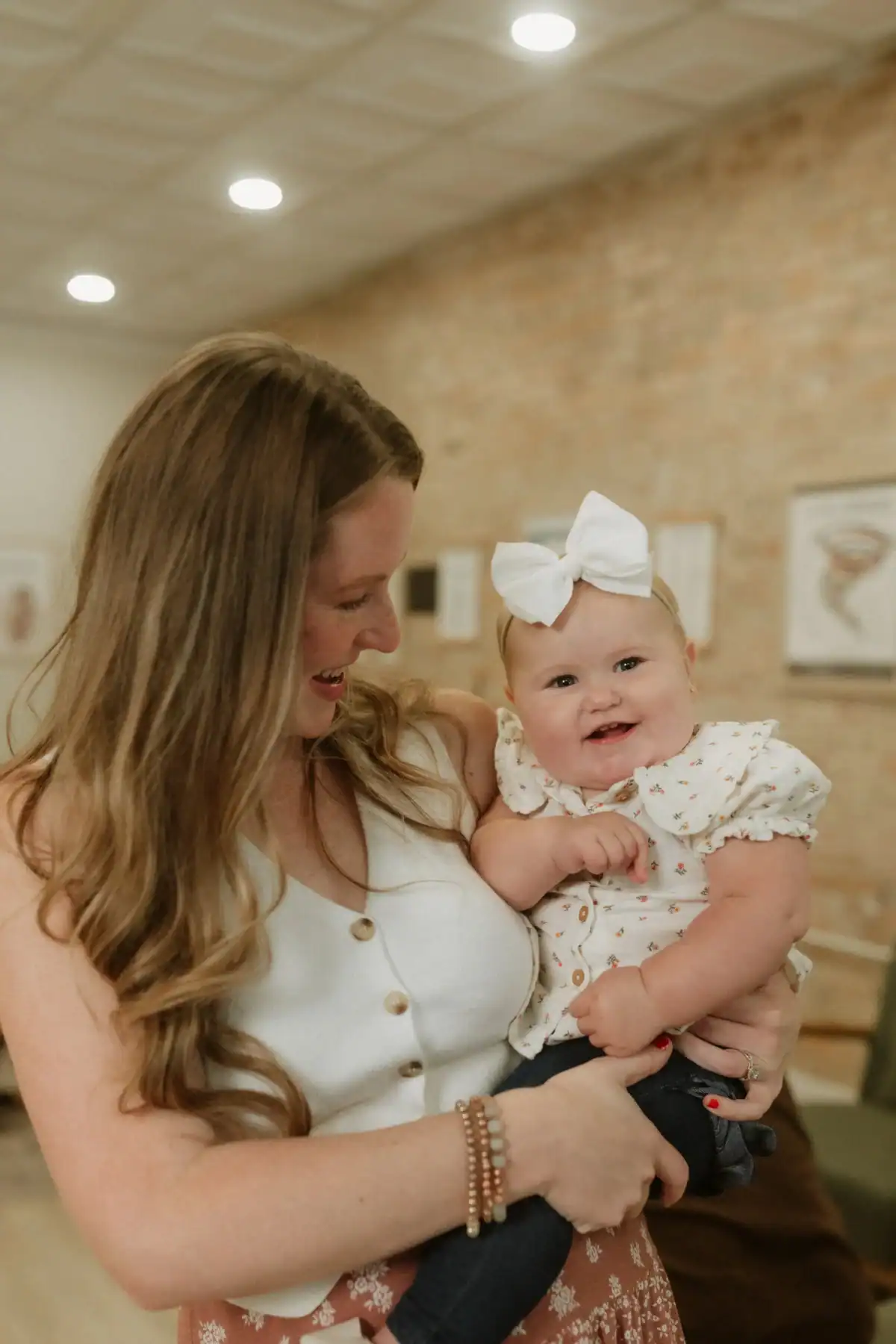
Have you ever noticed how your baby seems content in your arms, but the moment someone else holds them, the waterworks begin? Or how your little one senses when you are stressed and responds in kind? It is not a coincidence. It is co-regulation, and it is also why healthcare providers prioritize skin-to-skin contact right after birth.
Your baby’s nervous system does not regulate itself in isolation. It learns regulation by borrowing yours. A newborn’s nervous system is deliberately underdeveloped at birth. That is not a design flaw. Babies are built to need their parents to help regulate, calm, and nurture them.
When you hold your baby close, their heart rate, breathing patterns, and stress hormone levels synchronize with yours. Your baby is not reading your words or your intentions. They are picking up on your facial expressions, your voice tone, your heart rate, your breathing pattern, and the quality of your touch. When you are calm, your baby can borrow your calm until they develop regulation skills of their own.
The stakes of this early window are real. According to the Center on the Developing Child at Harvard University, more than one million new neural connections form every second in the first few years of life. The regulation patterns your baby practices with you now become part of the wiring their brain builds on for everything that follows.
The Gas Pedal and the Brake
A simple way to picture what is happening inside your baby: think of the nervous system like a car. The sympathetic system is the gas pedal, revving up heart rate and stress hormones in response to stress. The parasympathetic system, driven largely by the vagus nerve, is the brake pedal, slowing things down and promoting rest, digestion, and calm. Co-regulation is how a baby learns to use the brake, by feeling yours.
When Co-Regulation Doesn’t Come Naturally
Sometimes, despite your best efforts, co-regulation does not seem to work. Your baby stays fussy despite the cuddles, or you struggle to hold onto the calm your baby needs. This is not your fault. Several factors can stack up:
- High stress during pregnancy, including the stress of fertility struggles
- Birth interventions like C-sections, forceps, or vacuum extraction that create physical tension in the neurospinal structures of both mother and baby
- The exhaustion and overwhelm of the newborn season itself
That physical tension can create subluxation, nerve interference that particularly affects the vagus nerve, the brake pedal, making it harder for a baby’s system to settle even in calm arms. Without support at the root, babies do not simply grow out of regulation challenges. Too often they grow into new ones, like digestive issues, sensory struggles, or emotional regulation difficulties later on.
This is why an adjustment is rarely the whole picture. At Adjusted Living, INSiGHT scans can objectively measure nervous system stress in both mother and baby. If a baby’s nervous system is stuck in a stress state and a parent is stressed and exhausted, the two can reinforce each other. Supporting the baby’s nervous system helps break that loop from one side. Many families find that mom getting adjusted alongside her baby supports it from the other.
Co-regulation is not a reason for guilt. It is a reason for hope. As your baby’s nervous system finds better balance, that calm becomes easier for both of you.
Concerns a Gentle Adjustment Can Support

Chiropractic care supports babies through the nervous system, which is why the same foundational approach can help with a range of different presenting concerns.
Colic
A chiropractor approaches colic differently than most conventional options. Colic is not just digestive upset. It is often a sign of an overwhelmed or dysregulated nervous system. When the nervous system is flooded with stress signals it cannot process efficiently, the result can be prolonged crying that does not respond to feeding, rocking, or soothing.
The vagus nerve plays a central role. This nerve runs from the brainstem down through the chest and abdomen, governing digestion, gut motility, and emotional regulation. When tension in the upper cervical spine creates interference along the vagus nerve pathway, gut function can become dysregulated. Think of a phone running too many apps at once. The whole system slows down and overheats.
For colic, care focuses on reducing that upper cervical tension and helping the nervous system shift out of a stress state. If you are in the thick of it right now, our guide to natural colic relief walks through what families can try at home alongside care.
Reflux and Feeding Difficulties
For reflux, the connection worth looking at is between the upper cervical spine and the mechanics of feeding. The muscles involved in swallowing, the esophagus, and the lower esophageal sphincter are all influenced by the vagus nerve, the same pathway affected by cervical tension.
When misalignment in the upper neck creates nerve interference, it can affect how well a baby coordinates sucking, swallowing, and breathing. This shows up as reflux, frequent spitting up, or difficulty latching. Sometimes what looks like a latch problem is body tension instead. Our post on oral ties and infant tension explains how to tell the difference.
Torticollis
Torticollis is a persistent tilt or rotation of the head, usually caused by muscle tension or restriction in the cervical spine. Babies with torticollis may strongly prefer turning their head one direction, have difficulty latching on one side, or develop a flat spot on one side of the skull from consistent head positioning.
Here, gentle adjustments are paired with soft tissue work to release the muscular and spinal tension driving the asymmetry. The goal is restoring normal range of motion before compensatory patterns become entrenched. The sooner the restriction is addressed, the better the response tends to be.
General Wellness
This care is not only for babies with a specific concern. A well-functioning nervous system supports better sleep, stronger immune response, and greater adaptability to the demands of early life. Many parents use periodic visits as a proactive tool, supporting development rather than waiting for problems to appear.
What to Expect at Your Baby’s First Visit

A baby’s first appointment is calm, unhurried, and parent-centered. At Adjusted Living, Dr. Ryan Angelo brings more than seven years of pediatric chiropractic experience to every visit, and every family follows a personalized care plan built around their baby’s specific needs. Here is what a typical first visit looks like:
- Health history and intake: Your chiropractor will ask about your pregnancy, how labor and delivery went, what interventions were used, and what concerns brought you in. Nothing is too small to mention.
- Observation: Before any hands-on assessment, your chiropractor observes how your baby moves, holds their head, responds to stimuli, and feeds if possible. A lot of information comes from simply watching.
- Gentle assessment: Using their hands, your chiropractor feels along your baby’s spine for areas of tension, asymmetry, or restricted movement. This is not uncomfortable. Most babies remain calm throughout.
- The adjustment: This is where most parents are surprised. It looks like a finger resting on a specific spot with very light, sustained pressure. Many babies sleep through it. It takes only a few minutes.
- Post-visit guidance: Your provider will explain what they found, what they addressed, and what to watch for over the next 24 to 48 hours. Mild sleepiness or brief fussiness is normal.
A good provider will narrate what they are doing throughout and encourage you to ask questions. You are a participant in this visit, not just an observer.
The Nervous System Piece Most Parents Don’t Hear About
Most conversation about infant health focuses on symptoms: colic, reflux, poor sleep. What gets discussed far less often is the system underneath all of them.
Neurologically-focused care asks a different question than symptom-based approaches. Instead of asking what to do about the reflux, it asks how well the nervous system is communicating and adapting, and what is getting in the way.
Here is a simple way to think about it: the nervous system is the operating system of the body. When there is interference from spinal tension, birth stress, or early physical trauma, even basic programs like digestion, sleep, and immune response run poorly. The interface looks broken, but the real problem is in the operating system underneath.
The first years of life are the most critical window for nervous system development. This is when the brain and body are wiring together at a rate that will never be replicated. Tension or restriction in the spine during this window does not just affect how a baby feels today. It can shape how their developing nervous system organizes itself going forward.
That is especially relevant for babies who had difficult deliveries, required early medical interventions, or are showing signs of nervous system stress like persistent fussiness, poor sleep, or feeding challenges. If you want a closer look at why those first weeks matter so much, our post on baby chiropractor benefits after birth covers that ground in more depth.
How to Choose Someone to Adjust Your Baby

Proximity matters, because you will likely visit multiple times in your baby’s first weeks. But the right provider matters more. Here is a practical framework:
- Pediatric-specific training: Look for advanced credentials such as PX Docs certification or ICPA training. General chiropractic education does not automatically qualify someone to work with newborns. PX Docs certification indicates specialized training in caring for neurologically complex and sensitive children. Adjusted Living is the only pediatric-focused chiropractic office in the Chesterton and Porter County area with this credential.
- Experience with newborns: Ask directly how many newborns they see and how long they have been doing it.
- Neurologically-focused approach: A qualified provider looks at root cause and nervous system function, not just symptom reduction. Ask about their philosophy of care.
- Communication style: A great provider explains what they are doing, involves you in the process, and welcomes your questions. If you feel rushed or dismissed, that is important information.
- Your instinct as a parent: Trust it. If a provider makes you feel uninformed, hurried, or uncomfortable, they are not the right fit regardless of their credentials.
For families in Chesterton, Porter County, and across northwest Indiana, Adjusted Living offers neurologically-focused pediatric care built around this exact model.
FAQs About Infant Adjustments
At what age can a baby get a chiropractic adjustment?
From day one. Many parents bring their newborns in within the first week of life, particularly after a difficult delivery or when early feeding challenges appear. Earlier assessment means earlier support during the most critical window for nervous system development.
Does a chiropractic adjustment hurt a baby?
No. Infant adjustments use extremely light fingertip pressure, far gentler than most people expect. Many babies sleep through the entire thing. Mild, brief fussiness in the hours afterward is possible but not common, and it typically resolves quickly.
How many adjustments will my baby need?
This varies based on your baby’s presentation and your goals. Some babies respond noticeably within two to three visits. Others with more complex or layered concerns may benefit from a longer care plan. A good provider assesses progress at each visit and adjusts the approach based on how your baby is responding.
Can chiropractic care help with breastfeeding difficulties?
Feeding difficulties are one of the most common reasons parents seek infant care. Tension in the jaw, neck, and upper spine can affect a baby’s ability to latch, suck effectively, and transfer milk. Care focuses on the underlying restriction and nerve interference, not the feeding symptom by itself.
Do I need a referral from my pediatrician?
In most cases, no. Chiropractic care is a standalone healthcare profession, and you can book directly. Keeping your pediatrician informed about all aspects of your baby’s care is always a good idea. A coordinated approach serves your baby best.
Key Takeaways on Infant Adjustments
- An infant adjustment is light, sustained fingertip pressure on a specific spinal segment, comparable to testing a ripe tomato. There is no twisting, thrusting, or cracking.
- Birth places real physical stress on a newborn’s cervical spine, even during uncomplicated deliveries. Early assessment can identify and address tension before it compounds.
- Babies co-regulate with their parents. Their heart rate, breathing, and stress hormones sync with yours. Supporting a newborn’s nervous system, and often mom’s too, helps both settle into calmer patterns.
- In a 2019 observational study, mothers of more than 1,000 infants rated chiropractic care as effective, safe, and cost-effective, reporting minor self-limiting side effects in about 6% of cases and no adverse events.
- Common concerns supported include colic, reflux, feeding difficulties, and torticollis, all of which have a nervous system connection.
- When choosing a provider, look for PX Docs certification or ICPA credentials, specific newborn experience, and a neurologically-focused philosophy of care.
If you are wondering whether this care is right for your newborn, the best next step is a conversation with a qualified pediatric chiropractor. At Adjusted Living, our neurologically-focused, PX Docs-certified team has spent more than seven years supporting babies, children, and families with compassionate, drug-free care. Request an appointment today and give your baby the best possible start.
