

Key Takeaways
- The vagus nerve links your child’s brain and gut. When its signaling is off, digestive concerns like constipation, reflux, and bloating may be part of the picture.
- About 80% of the vagus nerve’s fibers carry information up to the brain from organs throughout the body, including the gut.
- Standard GI tests mainly look for structural or inflammatory causes, so many children with ongoing symptoms get normal results.
- Slow belly breathing, humming, singing, and outdoor play may help your child’s body shift into rest-and-digest. Research in children is still limited.
- Neurologically focused chiropractic care at Adjusted Living works alongside your child’s pediatrician and specialists. It uses INSiGHT scans to build a drug-free, non-invasive care plan around your child’s nervous system.
So how are the vagus nerve and digestion connected? The vagus nerve carries signals both ways between your child’s brain and gut, and it helps run digestion, from stomach acid to the movement of food. If your child struggles with chronic constipation, reflux, or stomach pain, and tests keep coming back normal, this nerve may be one piece of the puzzle. If you’ve already overhauled the diet and added probiotics, you’re not doing it wrong. Nutrition matters, and nervous system dysregulation is one more piece to understand.
What Is the Vagus Nerve (And Why Does It Matter for Your Child)?
The vagus nerve is the 10th cranial nerve and the longest of the cranial nerves. It runs from the brainstem through the neck, chest, and abdomen, connecting the brain to many major organs. It’s the main nerve of the parasympathetic system, the “rest and digest” branch that helps the body calm down, recover, and digest food.
What surprises most parents: about 80% of the vagus nerve’s fibers carry information up from the organs to the brain, not down from the brain, according to research indexed by the NIH. Those organs include the gut, so your child’s gut is constantly reporting back to the brain.
The vagus nerve also helps regulate heart rate, immune response, and inflammation. When its signaling is off, digestion is one place children may show it.
The Vagus Nerve and Digestion: How They Work Together
How the vagus nerve affects digestion is more specific than most people realize. It triggers stomach acid production, signals the release of digestive enzymes, and helps signal when food should leave the stomach. It also helps coordinate the migrating motor complex, the rhythmic muscle wave that sweeps food through the intestines.
Think of the vagus nerve as the conductor of the digestive orchestra. When signaling works well, stomach acid flows when it should, enzymes activate on cue, and food moves at a steady pace. The vagus nerve may also help the gut and its microbes communicate with the brain, which is one reason researchers study vagus nerve and gut health together.
The vagus nerve is one important part of the system that coordinates digestion, working alongside the gut’s own network of nerves.
What Is Vagal Tone and Why Does It Matter for Your Child’s Digestion?
Vagal tone is the baseline activity of the vagus nerve, or how steadily it does its job. Higher vagal tone is generally linked with a flexible, well-regulated stress response. Researchers often estimate it with heart rate variability (HRV), the small changes in time between heartbeats. Some studies have linked lower vagal activity with functional abdominal pain in children, but results are mixed, and HRV cannot confirm or rule out a digestive problem. The good news is that vagal tone isn’t fixed. Sleep, stress, and daily habits all influence it.
Signs of Vagus Nerve Dysfunction in Kids’ Digestive Health
Vagus nerve dysfunction symptoms in children don’t always look like a nerve problem. They look like a stomach problem. That’s why many families spend years chasing GI answers that don’t fully explain what’s happening.
Common digestive signs to watch for include:
- Chronic constipation or slow digestion
- Persistent bloating and abdominal discomfort
- Acid reflux or frequent nausea
- Poor appetite or extreme food selectivity
- Food sensitivities that seem to multiply over time
- Stomach pain without a clear structural cause
These signs have many possible causes, so start with your child’s pediatrician, especially for blood in the stool, vomiting, or weight loss. Many of these children have had extensive testing, including scopes, imaging, and food allergy panels, with normal results. Keeping a simple log of food, stools, stress, and sleep can help you spot patterns to share at your next visit. Those tests are built to find structural, inflammatory, or allergic causes. They aren’t designed to look at how the nervous system regulates digestion.
Some families also notice sleep trouble, skin flare-ups, mood swings, or frequent illness alongside signs of poor gut health in children. These have many causes, and research ties them to the gut mostly through association.
Constipation is a common example, and the link between the vagus nerve and constipation in kids is still being studied. Most childhood constipation has everyday causes, such as diet, fluids, and stool withholding, so rule those out first. Researchers also study how nerve signaling affects gut movement, and early-life factors may play a role. Studies link cesarean birth with differences in the infant gut microbiome, though cesarean birth can be lifesaving and a cause is not proven.
Why Do So Many Kids With Chronic Digestive Issues Get a Clean Bill of Health?
Standard GI workups look for structural problems: inflammation, anatomical differences, and infection. When those come back normal, the explanation is often a functional digestive disorder, now called a disorder of gut-brain interaction. The gut looks normal but doesn’t work normally, and how the brain and gut communicate is thought to play a part. Think of the nervous system as an air traffic controller. When a child’s body stays stuck in a stress-dominant state, digestion may wait on the runway, a survival response that becomes a problem when it never shifts back to rest-and-digest.
The Gut-Brain Axis in Children: A Two-Way Conversation

The gut-brain axis is a two-way communication network between the enteric nervous system (the gut’s own network of hundreds of millions of neurons) and the central nervous system. The vagus nerve is one of its main pathways. In children, this system is still developing, which may make it more sensitive to disruption and more responsive to support.
When the gut-brain connection in kids is working well, the two systems regulate each other. When it’s disrupted, effects can travel both directions: gut problems may add to anxiety and mood changes, and emotional stress can worsen gut symptoms. Parents often describe children who seem anxious and constipated, or whose stomach aches show up before school or social stress. This pattern is one of several nervous system dysregulation symptoms worth knowing about.
That two-way link is why the nervous system and gut health are so closely tied. The gut makes roughly 90% of the body’s serotonin. Most of it helps regulate gut movement rather than mood, because gut-made serotonin doesn’t cross the blood-brain barrier. Diet and probiotics matter, but they address one part of the picture. Because children’s nervous systems are still developing, early support may matter even more.
Vagus Nerve Stimulation: Natural Ways to Support Digestion in Kids
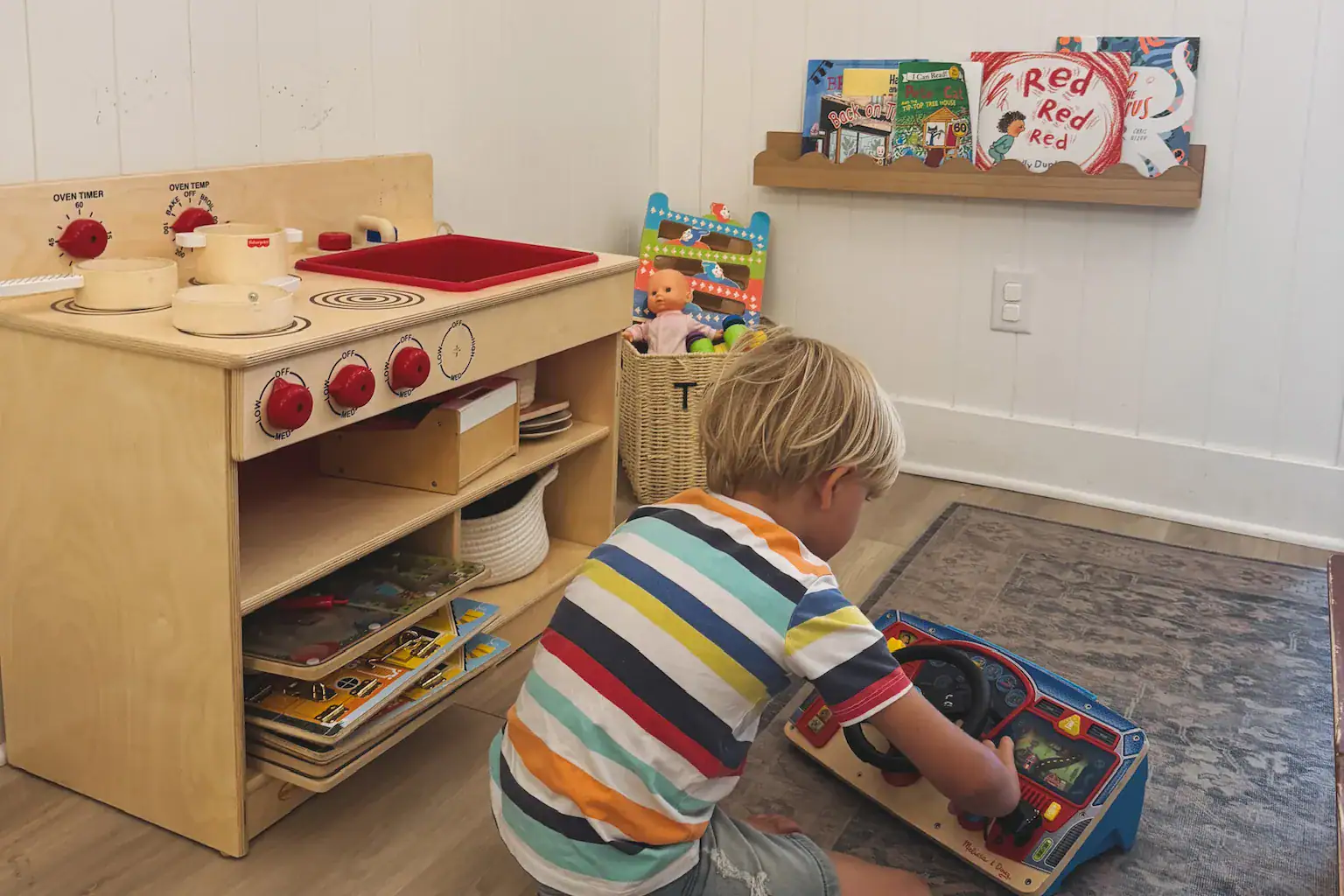
Medical devices can stimulate the vagus nerve, but simple daily habits can support it too. Research on these ideas in children is limited, so think of them as supportive habits, not a replacement for medical care. These habits are easy to try at home:
- Deep belly breathing: engages the diaphragm, which sits near major vagal pathways. A few slow belly breaths may help a child start to settle.
- Humming and singing: create vibration in the throat and voice box, where vagal branches run. Research is limited, but it’s easy, and singing along to a favorite song is often simpler for kids than humming alone.
- Gargling with water: also moves the throat muscles. It suits older kids who can gargle safely.
- Cool water on the face: can trigger the dive reflex, which slows heart rate. Check with your doctor first if your child has a heart condition.
- Social play and outdoor movement: help a child feel safe, which supports a calmer rest-and-digest state.
When the body is stuck in fight or flight, digestion slows. These habits may help shift children out of that stress-dominant state and back toward rest-and-digest. Keep up the whole foods, outdoor play, and steady bedtime too. These habits work best with consistency, so pick one or two that your family enjoys. Change is usually gradual, and there is no single timeline.
Why Breath and Sound Techniques Are a Good Place to Start
The vagus nerve sends branches to the throat and voice box, and slow breathing and humming engage those same areas. For parents, that means bedtime breathing or car-ride sing-alongs are easy ways to build calm into your child’s routine. Try breathing in for four counts, holding for two, and breathing out for six, before meals or during wind-down time. Younger kids often do better with a game, such as pretending to smell a flower and blow out a candle.
How Neurologically Focused Chiropractic Care Supports the Nervous System

At Adjusted Living, care for children with complex nervous system presentations, including autism, epilepsy, digestive concerns, and special needs, is drug-free and non-invasive. It works alongside your child’s pediatrician and specialists, never in place of them.
Chiropractors who focus on the nervous system look closely at the upper cervical spine, near where the vagus nerve leaves the skull. In the chiropractic model, restricted motion there, called subluxation, may interfere with how clearly nerve signals travel. Research on this idea for digestive symptoms in children is still limited, so it is best seen as one supportive piece of the picture. Adjustments are gentle and tonal.
As a PX Docs-certified chiropractor in Chesterton, Adjusted Living is the only pediatric-focused chiropractic office in the Chesterton and Porter County area with this credential. Nervous system chiropractors use objective tools, called INSiGHT scans, to see what’s happening:
- Heart rate variability (HRV): an indirect index of autonomic nervous system activity, including vagal influence
- Surface EMG: records muscle activity along the spine
- Rolling thermography: looks at temperature patterns along the spine as a window into autonomic stress
Scans don’t replace a medical evaluation. They give Dr. Ryan objective information to use alongside your child’s health history when building a personalized care plan and tracking changes over time. Every child responds differently.
If your child’s digestive symptoms have left you searching for answers, request an appointment at Adjusted Living in Chesterton, Indiana. Care is drug-free, non-invasive, and built around your child’s unique nervous system.
FAQs About the Gut-Brain Link in Kids
What is the vagus nerve’s role in digestion?
The vagus nerve is a major two-way link between the brain and the digestive system. It helps trigger stomach acid and digestive enzyme release. It helps coordinate the muscle contractions that move food through the gut. It also carries information about the gut back to the brain. When its signaling is off, a child may have slow digestion, constipation, bloating, or reflux, though these symptoms have many possible causes.
What are the signs of vagus nerve problems in children?
There is no single symptom list or test for vagus nerve trouble. Parents often notice chronic constipation, bloating, stomach pain, acid reflux, poor appetite, and nausea. These signs have many causes, so start with your child’s pediatrician. If tests are normal, a functional gut-brain disorder may be worth discussing.
Can vagus nerve stimulation help kids with digestive problems?
Slow breathing, humming, singing, and play may help a child feel calmer and shift into rest-and-digest, but research on digestion in children is limited. Medical devices that stimulate the vagus nerve are a separate matter and are used only under a doctor’s care.
What is the gut-brain axis and why does it matter for kids?
The gut-brain axis is the two-way communication network between the gut and brain, with the vagus nerve as one of its main pathways. In children, this system is still developing, so stress and other challenges may affect it more. When it’s disrupted, children may have digestive symptoms alongside anxiety or mood changes.
How is vagus nerve function assessed at a chiropractic office?
Adjusted Living uses INSiGHT scans: HRV as an indirect index of autonomic activity, surface EMG to record muscle activity along the spine, and rolling thermography to look at temperature patterns along the spine. These tools don’t replace a medical evaluation, but they help guide a personalized care plan for your child.
