

Parents often ask, “What is an INSiGHT scan?” when they first come to our office. An INSiGHT scan is a non-invasive assessment of how well your child’s nervous system is working, not how their spine looks. It measures nerve activity, muscle tension, and heart rhythm along the spine. Whereas a standard checkup measures height, weight, reflexes, and milestones.
If your child struggles with sleep, focus, or sensory overload, you’re not alone, and you don’t have to guess at why. That’s where a nervous system chiropractor makes a difference. At Adjusted Living, we scan before we adjust.
What is an INSiGHT Scan and Why Does It Matter?
An INSiGHT scan measures nervous system function, which is the layer a standard exam was never built to reach. It’s not an X-ray, and it’s not an MRI. Nothing about it uses radiation.
Standard imaging answers a structural question. It shows what bone and soft tissue look like in a single moment, which is exactly the job it was designed for. Neurologically focused chiropractic scans ask something else. They read the electrical and thermal activity along the spine to show what the nervous system is doing with the structure it has.
The difference is closer to a mechanic plugging a scanner into a car than to a photograph of the engine. The engine can look untouched while the scanner pulls up error codes the eye would never catch.
That distinction matters because the nervous system runs the systems parents worry about most. Breathing, digestion, immune response, sleep, focus, and emotional regulation all depend on clear signals traveling between the brain and the body. When those signals are distorted, the effects show up somewhere nobody thought to look.
Why We Look at the Nervous System First
We look there first because your child’s nervous system is the command center of their entire body. The brain, the spinal cord, and the nerves branching out from them form one communication network. Every message to an organ, a muscle, or the immune system travels through it.
Picture the spine as a fiber optic cable running the length of the body. Kink it, compress it, or hold it under tension, and the signal weakens without the cable ever looking broken. That tension pattern has a name in chiropractic care, and subluxation is one of the two findings these scans are built to identify.
Subluxation doesn’t always announce itself with discomfort, which is why a subluxation test measures function instead of asking where it hurts. What it creates is interference. That interference looks like the toddler who never sleeps through the night or the child whose reactions seem far bigger than the moment calls for.
The second finding is dysautonomia, which is what happens when the autonomic nervous system loses its ability to self-regulate. Think of the sympathetic side as your child’s gas pedal and the parasympathetic side as their brake. A nervous system stuck in fight-or-flight keeps its foot on the gas long after the stressor is gone. That’s why it affects far more than mood.
How the Scan Reads Your Child’s Nervous System

Three separate technologies do the measuring, and each one looks at a different layer of nervous system function. Rolling thermography covers the autonomic side, surface EMG the muscular side, and heart rate variability shows how well the whole system adapts. Alone, each one only shows a slice. Together, they show whether your child’s nervous system is coping or stuck.
What Rolling Thermography Reads
Rolling thermography, sometimes called a thermal scan, reads temperature differences down each side of the spine. Balanced nerve supply produces steady, even readings from left to right, because blood flow is being regulated the same way on both sides.
Nerve interference disrupts that regulation unevenly, the way a kink in a garden hose drops pressure on one side while the other runs normally. The asymmetry that shows up indicates where the body is working hardest to regulate itself.
What the Surface EMG Scan Reads

The surface electromyography (EMG) scan reads electrical activity in the muscles alongside the spine, using small sensors that rest on the skin. No needles are involved. Those readings show whether the nervous system is working too hard or has stopped working hard enough in a specific area.
A 2024 review in Diagnostics describes surface EMG as a non-invasive way to measure how the muscles along the spine are firing. In our office, we look at the pattern across the whole spine rather than any single number. Think of the level meters on a stereo, where a balanced mix sits even across every channel. High readings suggest a system working overtime to hold an area stable, and low readings suggest one that has started to check out.
What Heart Rate Variability Reads
Heart rate variability (HRV) measures the small differences in time between one heartbeat and the next. That variation is a sign of health rather than a problem, because it shows a nervous system responding moment to moment instead of running on a fixed setting. The HRV scan chiropractic procedure tracks that variation to see how well a child adapts to stress.
A 2023 review in Biomedicines ties higher variability to healthier autonomic regulation and lower variability to a system leaning hard on its stress response. A nervous system with room to move bends like a tall tree in the wind. A rigid one struggles to recover from an ordinary day.
Why Early Detection Matters in Children

More of the nervous system gets built in the first few years than at any point after. That makes it both the best time to catch a stress pattern and the easiest time to miss one. Birth stress, illness, and early developmental challenges all leave marks that quietly shape how a child grows, learns, and behaves.
Those patterns rarely surface in a routine exam, because nothing in a standard pediatric visit amounts to nervous system testing. A growth chart can’t show signs of nervous system dysregulation, and a normal physical doesn’t rule them out.
Colic, disrupted sleep, sensory sensitivity, focus challenges, and developmental delays often trace back to a nervous system that needs support rather than a behavior that needs correcting. Chiropractic care works alongside your pediatrician, not instead of them.
In children, the scans commonly surface patterns like:
- Autonomic stress patterns: Readings that track with sleep, digestion, and behavior regulation
- Thermal asymmetry: Uneven temperature along the spine marking where nerve interference sits
- Low HRV scores: A nervous system holding a stress response it hasn’t been able to release
- EMG imbalance: Muscles compensating on one side for signals that aren’t arriving cleanly
At Adjusted Living, we read those patterns against what a family is actually living with at home. Dr. Ryan Angelo does that reading for children at every stage, including complex cases involving autism, epilepsy, and special needs. His PX Docs certification is the only credential of its kind in Chesterton and Porter County. He’s spent over seven years doing neurologically focused pediatric chiropractic care.
What Happens During Your Child’s Scan
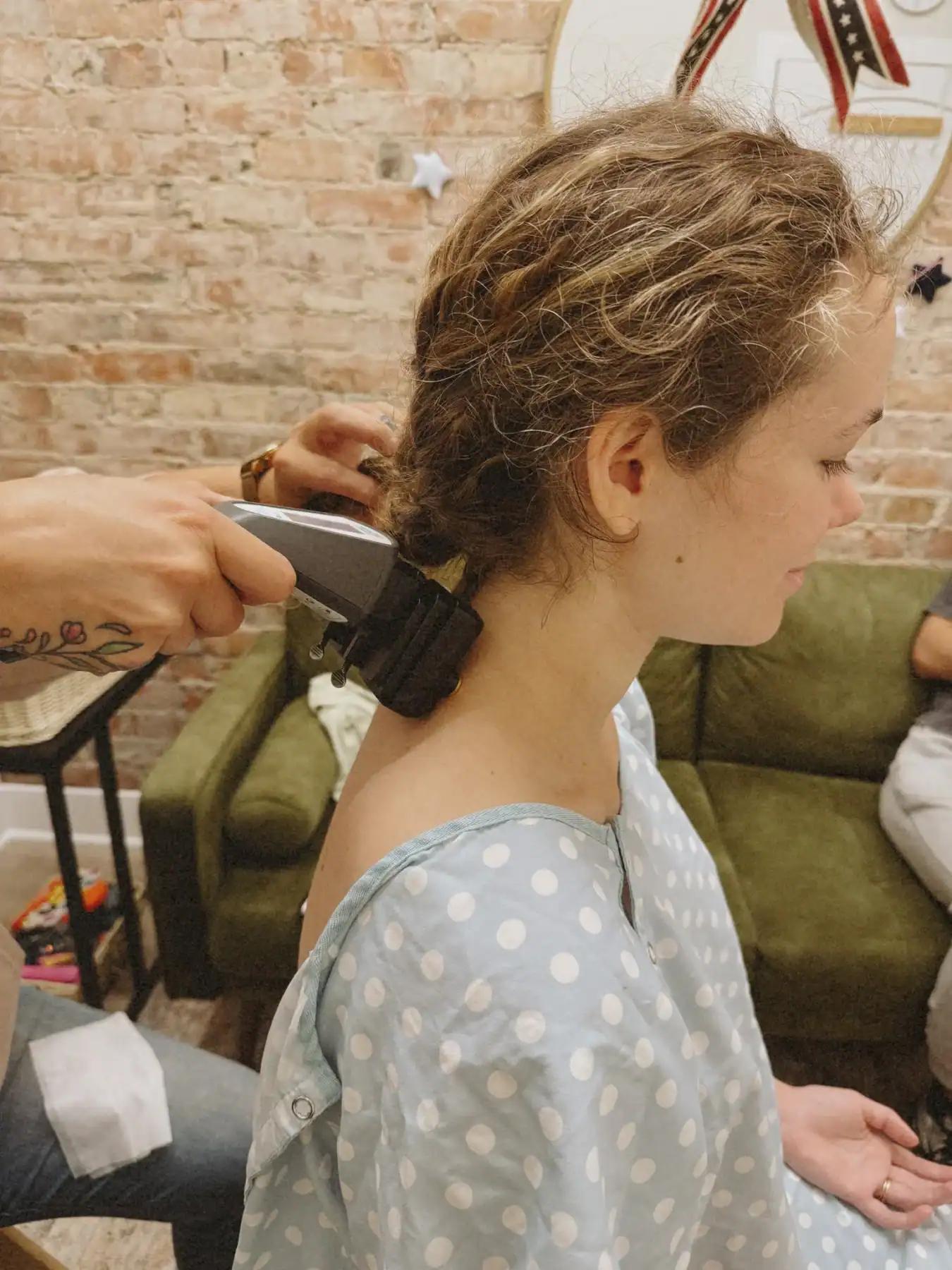
The scan has its own space in the office, and our team walks your family through each step before it starts. Everything is explained as you go, so you always know what to expect.
The scan itself asks nothing of your child beyond sitting still for short stretches, and the whole thing is over in a matter of minutes. There’s no preparation beforehand and no recovery afterward.
There’s nothing to feel beyond light contact. The sensors rest against the skin along the spine with no pressure and no heat, and they only read what the body is already doing. Nothing is added to your child during the process, and nothing about it is invasive. That’s also what makes the scan repeatable often enough to track real change over time.
What Happens After Your Scan Results
The scans show where stress is stuck in your child’s nervous system and how well the body is adapting to it. That’s a starting point for care, not a diagnosis.
We build a personalized care plan from those results, then sit down together for a Report of Findings to walk you through all of it. Every nervous system is unique, so no two plans look the same.
Follow-up scans track what changes, so progress becomes something you can see instead of guess at. Families have described that shift in their Stories of Hope, and individual results vary.
This approach doesn’t chase symptoms. Working with a chiropractor in Chesterton who measures before adjusting means every recommendation stays guided by real data.
Key Takeaways Before Your Child’s First Scan
Neurological scanning doesn’t replace the checkup. It reads the layer a checkup was never designed to reach, which is function rather than structure. For a child whose results keep coming back normal while daily life says otherwise, that’s usually where the answer sits.
- Function, not structure: Thermal, EMG, and HRV readings show how the nervous system is working rather than how the spine looks.
- Three readings, one picture: No single scan tells the whole story, which is why all three are read side by side.
- Nothing invasive: No radiation, no needles, and no discomfort at any age.
- Subluxation and dysautonomia: These are the two findings the scans are built to identify, and neither one requires discomfort to be present.
- A starting point, not a diagnosis: Results shape the care plan and give follow-up scans something concrete to measure against.
Once you can see where your child’s nervous system is holding stress, hope stops being a feeling and starts having evidence behind it.
If you’re ready to find out what your child’s nervous system is actually doing, request an appointment at Adjusted Living Chiropractic in Chesterton, Indiana.
